Notes
Here, I share new things I learn, along with ideas and topics that spark my curiosity.
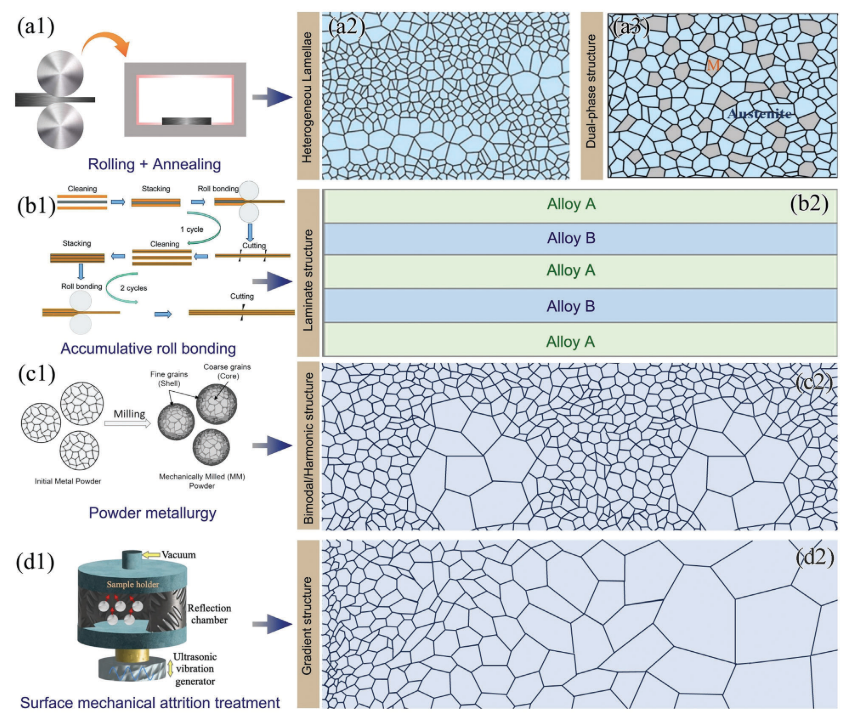
Introduction Heterostructured Materials
Heterostructured materials are a class of materials containing spatially distinct regions, commonly referred to as hetero-zones, with substantially different mechanical or physical properties. These differences may originate from variations in grain size, dislocation density, phase constitution, chemical composition, crystallographic texture, or other microstructural characteristics. Accordingly, heterostructures may appear in several forms, including lamellar, bimodal, different types of gradient, laminated, dual-phase, and core-shell architectures. Read More
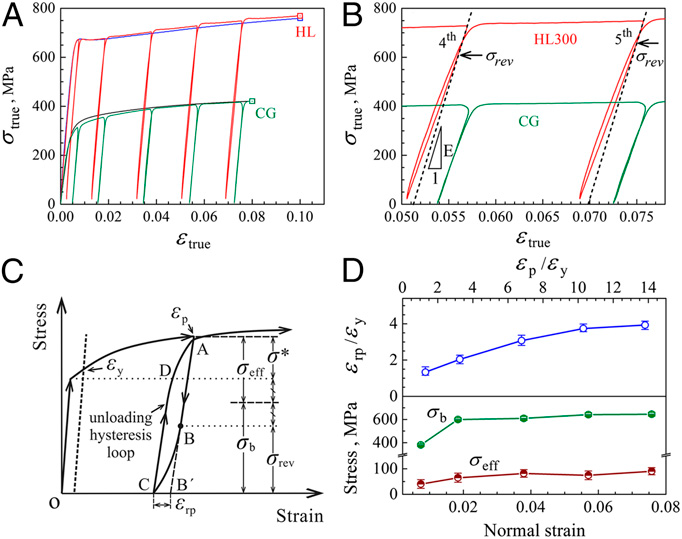
Characterization and Testing of Heterostructured Materials, Part 1 (The LUR Test and the Origin of HDI Stress)
A heterogeneous microstructure does not necessarily behave as an effective heterostructure. The presence of regions with different grain sizes, dislocation densities, or recrystallization states only establishes structural heterogeneity. For these regions to produce a meaningful synergistic mechanical response, they must interact during deformation. The loading-unloading-reloading test, commonly known as the LUR test, is one of the most widely used methods for investigating this interaction and estimating the internal stress that develops between mechanically dissimilar zones [1,2]. Read More
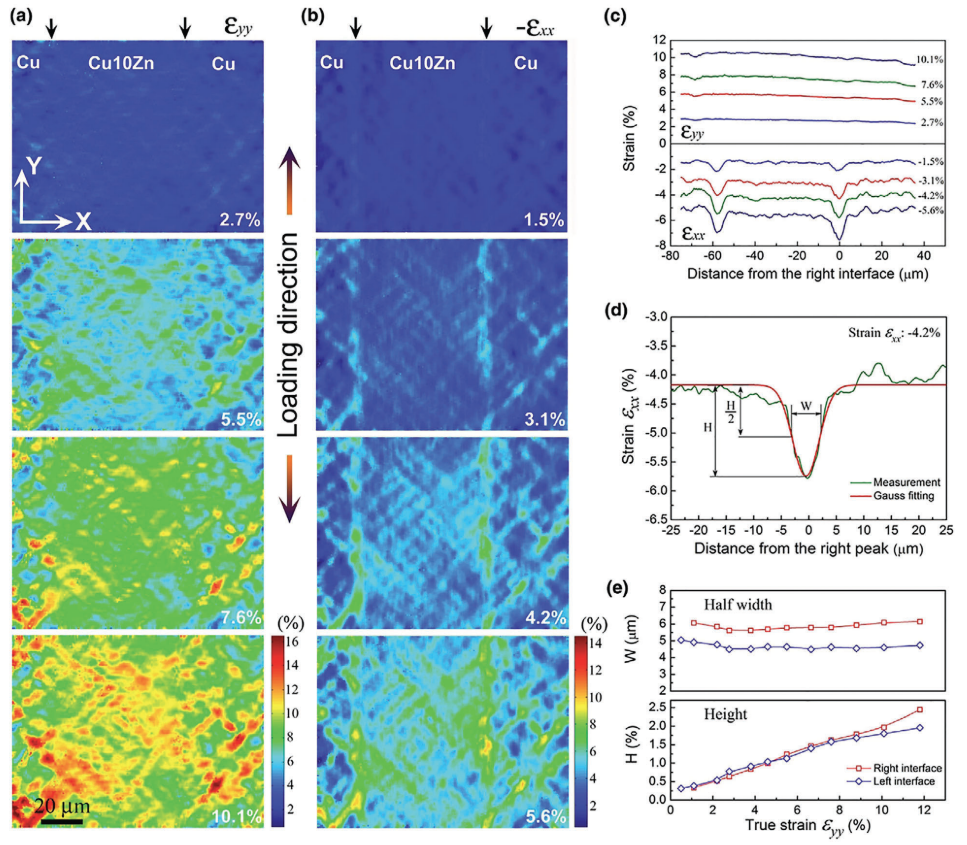
Characterization and Testing of Heterostructured Materials, Part 2 (In-Situ DIC and Strain Partitioning)
Heterostructured materials contain mechanically dissimilar zones that do not necessarily carry the same amount of plastic strain. After yielding, softer zones generally deform more readily, while harder zones constrain their deformation. This difference is known as strain partitioning and is one of the central origins of hetero-zone interaction [1,2]. Read More
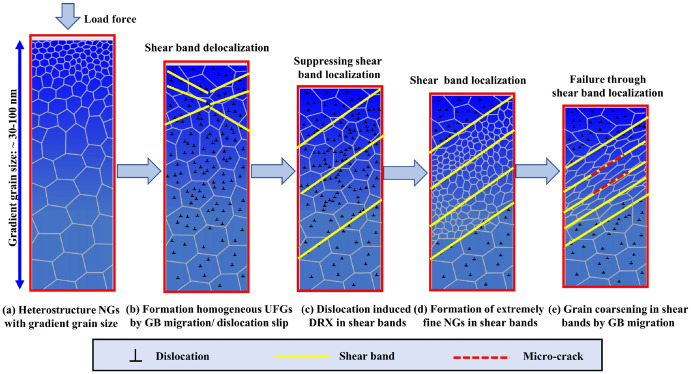
Strain-Band Evolution in Heterostructured Materials
Strain bands are narrow regions in which plastic strain becomes concentrated relative to the surrounding material. They are particularly common in ultrafine-grained and nanostructured regions because these structures generally have limited capacity for sustained dislocation storage and work hardening. Once a local band begins to deform, the resistance within that path may not increase sufficiently to redirect deformation elsewhere [1,6]. Read More